MikhailKulyabin
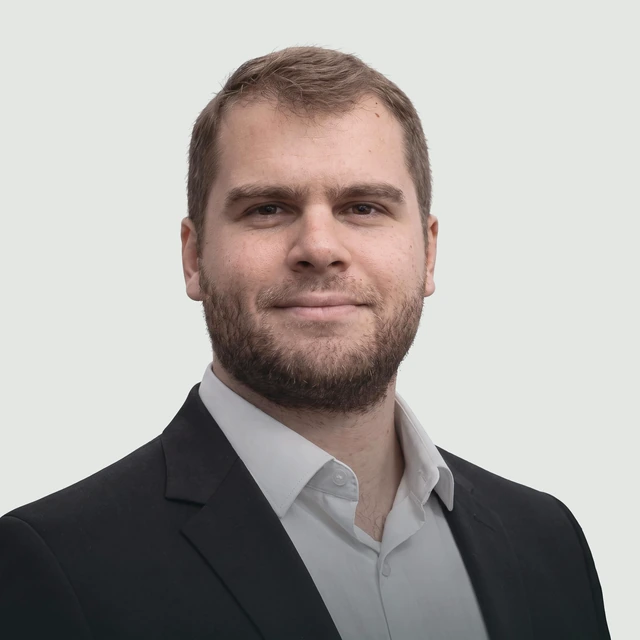
AI engineer and research scientist in medical imaging, AI agents and user experienceDr.-Ing.
I’m an engineer and a researcher. I train models and I ship them: the datasets and the annotation, the training, the API and the service around it, the data pipelines underneath, the cloud and the CI that keep it running, and the interface the person on the other end actually uses. What is worth publishing, I publish. I work in a few domains at once — retinal imaging and clinical AI, LLM agents for industrial engineering, and the user-experience side of both.
- 27
- papers
- 469
- citations
- 12
- h-index
Google Scholar, 2026-09-13
Contact
Let’s build something
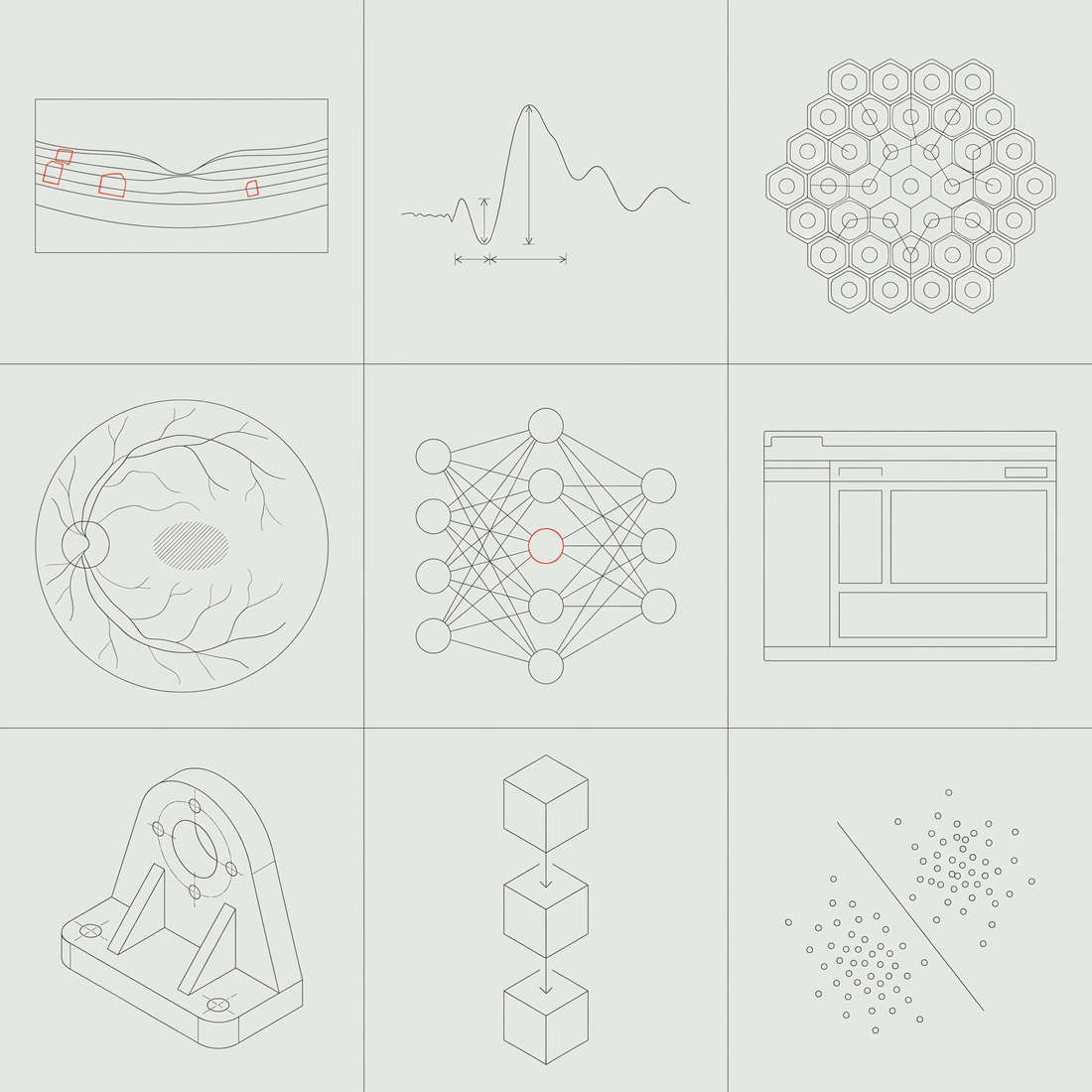
I can join at any point on the line — a research question that needs answering properly, a model that has to become a service, or a system already running that nobody quite trusts. Three directions, and the interesting work usually sits where two of them meet.
Medical AI, and the platform under it
Retinal imaging, signal analysis, clinical datasets. Collection and annotation, segmentation and classification models, containerised inference behind an API, and the report a clinician puts their name to. Take one piece of it or the whole line.
Agents and language models
Multi-agent copilots, retrieval over documentation nobody wrote to be queried, knowledge graphs — built, deployed and instrumented rather than prototyped and handed on. Including the unglamorous half: working out whether any of it does what you think it does.
User experience for technical work
Whether a clinician or an engineer trusts what a model hands back, and what it costs when they don’t. I do both halves — the studies that measure the trust, and the interface that has to earn it. The strand most teams skip, and then find they could not.
Also open to reviewing, supervising a thesis, and speaking. Email reaches me fastest.
Experience
2016 — presentTwo threads run in parallel right now — industrial AI at Siemens and the medical AI company I co-founded — on top of a doctorate, and six years of mechanical engineering before that.
- 2024 — present
Postdoctoral Researcher
Siemens AGErlangen
FT UX DES, FT UX AXR, FT UX SII
Generative AI and LLM systems for engineering workflows: multi-agent copilots, retrieval pipelines and knowledge graphs over enterprise data. I do the development and the operations around them — Python services, data collection and storage in Snowflake with dbt models on top, deployment on Azure and AWS, containers, CI and infrastructure as code — plus the user-experience research that decides whether an engineer trusts what comes back.
- 2024 — present
Co-founder and CTO
I built the technical side of a regulated medical device end to end, from the idea to the working product: the segmentation and classification models that read OCT and fundus images, the copilot that answers over a patient’s history, the platform and the clinical reporting around them, the integration with hospital systems, and the infrastructure it all runs on. In clinics on three continents.
- 2022 — 2024
Doctoral Researcher
Pattern Recognition Lab, FAU Erlangen-NürnbergErlangen
I ran the AI track of an international retinal imaging project — OCT, fundus and adaptive-optics data, three institutions across Norway, Germany and Russia — and owned it from the data up: the collection and annotation protocols agreed with the clinics, the training pipelines on the university GPU cluster, and the models themselves, CNNs, transformers, GANs and U-Nets for segmentation and classification. Out of it came OCTDL, an open dataset published in Nature Scientific Data and cited over two hundred times, and twenty more papers.
- 2018 — 2022
Computer Aided Design Engineer
Franke GmbHMoscow and Bad Säckingen
- 2016 — 2018
Mechanical Engineer
State Corporation RostecMoscow
Education
- 2023 — 2025
Ph.D. in Computer Science
FAU Erlangen-Nürnberg
AI for diagnosing retinal diseases: deep learning and computer vision on OCT, fundus and electroretinography data. Supervised by Prof. Dr. Andreas Maier at the Pattern Recognition Lab.
- 2019 — 2023
M.Sc. in Computational Engineering
FAU Erlangen-Nürnberg
Numerical methods, scientific computing, image processing. Thesis on generative augmentation of medical data.
- 2016 — 2018
M.Sc. in Mechanical Engineering
Bauman Moscow State Technical University
Continuum mechanics, finite element and CFD simulation, thermodynamics — ANSYS, LS-DYNA and SolidWorks.
- 2016 — 2018
B.Sc. in Project Management
Bauman Moscow State Technical University
Project management, business planning, financial analysis.
- 2012 — 2016
B.Sc. in Mechanical Engineering
Bauman Moscow State Technical University
Engineering mechanics, machine design, manufacturing technology.
VisioMed.AI
The company I co-founded reads eyes. Both panels below are the real product, not a mock-up: the segmentation a model returns for a scan, and the copilot a doctor asks about it afterwards.
visiomed.ai
Studies
| ID | File name | Type | Doctor | Patient | Status | Biomarkers | Date and time | Actions |
|---|---|---|---|---|---|---|---|---|
| 1648 | OCT_OD_2026-08-13_1042.dcm | OCT | Anna Sokolova | P-10428 | Completed | ✓ found | 13.08.2026, 10:42 | |
| 1647 | FUNDUS_OS_2026-08-13_0917.jpg | Fundus | Anna Sokolova | P-10428 | Completed | ✓ found | 13.08.2026, 09:17 | View |
| 1646 | OCT_OS_2026-08-12_1655.dcm | OCT | Dmitry Orlov | P-10391 | Completed | ✓ found | 12.08.2026, 16:55 | View |
| 1645 | OCT_OD_2026-08-12_1430.dcm | OCT | Maria Lebedeva | P-10377 | Completed | ✓ found | 12.08.2026, 14:30 | View |
| 1644 | FUNDUS_OD_2026-08-11_1806.jpg | Fundus | Maria Lebedeva | P-10377 | Completed | ✓ found | 11.08.2026, 18:06 | View |
| 1643 | OCT_OS_2026-08-11_1124.dcm | OCT | Elena Volkova | P-10362 | Completed | ✓ found | 11.08.2026, 11:24 | View |
| 1642 | FUNDUS_OS_2026-08-10_1539.jpg | Fundus | Dmitry Orlov | P-10344 | Completed | ✓ found | 10.08.2026, 15:39 | View |
| 1641 | OCT_OD_2026-08-10_0948.dcm | OCT | Elena Volkova | P-10344 | Completed | ✓ found | 10.08.2026, 09:48 | View |
Every study in one list: type, clinician, status, whether biomarkers were found. A new one is added by dropping a file — DICOM or an image: .dcm, .png, .jpg, .jpeg, .bmp, .tiff.
Open the platformResearch
469 citationsThe doctorate asked one question in four ways: can a machine read the eye well enough to help the person treating it? Two of the four look at pictures of the retina, two at the electrical signal it produces.
- Scientific Data
OCTDL, an open OCT dataset
Retinal deep learning was being trained on a handful of small, closed datasets. So we built one and gave it away: 2,064 B-scans from 821 patients across seven conditions, each graded by medical specialists, with the raw metadata kept so it can be merged with other public sets. It is the second largest open OCT dataset by participants and conditions, and it has since been used to train ophthalmic foundation models in NEJM AI and Cell Reports Medicine.
Read the paper - Sensors
Reading the electroretinogram as a picture
An ERG is a one-dimensional waveform, and the diagnostic information sits in when each frequency arrives, not in the shape of the curve. Converting the signal with continuous wavelet transforms turns it into a time-frequency image an ordinary vision model can classify. Stacking three different mother wavelets as colour channels beat every single-wavelet model.
Read the paper - IEEE Access
Autism in the retinal signal
The retina is central nervous tissue, so a neurodevelopmental difference should leave a trace in its electrical response. It does. A gated multilayer perceptron reading the light-adapted ERG directly separated autistic from control children — from a test that takes seconds and needs no imaging.
Read the paper - ICPR
Counting cones in adaptive optics images
Adaptive optics resolves individual cone photoreceptors, but counting them by hand is the bottleneck. A generalist segmentation model finds and outlines each cone across the mosaic, and Voronoi analysis of the result gives density, spacing and regularity — accuracy holding from the fovea out to two degrees of eccentricity.
Read the paper
Most cited
- 206citationsOCTDL: Optical coherence tomography dataset for image-based deep learning methodsScientific Data, 2024
- 29citationsSegment anything in optical coherence tomography: SAM 2 for volumetric segmentation of retinal biomarkersBioengineering, 2024
- 26citationsEnhancing electroretinogram classification with multi-wavelet analysis and visual transformerSensors, 2023
- 25citationsAttention to the electroretinogram: Gated multilayer perceptron for ASD classificationIEEE Access, 2024
- 24citationsSNOBERT: A Benchmark for clinical notes entity linking in the SNOMED CT clinical terminologyInternational Conference on Pattern Recognition, 2024
Competitions
- 2nd
Yandex AI Startup Lab
Second in the DeepTech track with VisioMed.AI. Twelve teams reached the final out of roughly a thousand applications; the prize paid for pilots at Moscow eye clinics.
 2026DeepTech
 - 2nd
SNOMED CT entity linking challenge
Second place on DrivenData for a BERT-based linker that maps clinical notes onto SNOMED concepts. Written up in JAMIA.
 2024553 teams
 - Gold
SETI Breakthrough Listen
Kaggle gold medal for separating candidate extraterrestrial signals from radio telescope noise.
 2021768 teams
 - 2nd
HuBMAP: Hacking the Kidney
Second place on Kaggle for glomeruli segmentation in whole-slide kidney images.
 20211,625 teams
Toolkit
What the work is actually made of.
Training models
- PyTorch
- CNNs
- Transformers
- ViT
- ResNet
- U-Net
- GANs
- Diffusion
- SAM 2
- Wavelet transforms
- Self-supervised
- Foundation models
- scikit-learn
Agents and language
- LLM agents
- RAG
- LangChain
- Hugging Face
- Claude Code
- OpenCode
- BERT
- NLP
- Knowledge graphs
- Entity linking
- SNOMED CT
- Evaluation
- Prompt tooling
Building the system
- Python
- C++
- FastAPI
- REST APIs
- PostgreSQL
- SQL
- MongoDB
- Kafka
- Docker
- Microservices
- CI/CD
- Bash
- NumPy / Pandas
Running it
- Azure
- AWS
- Terraform
- OpenTofu
- Snowflake
- dbt
- Vector DBs
- CUDA
- Slurm / HPC
- DICOM / PACS
- Linux
- Git
- MATLAB
- Spoken
- EnglishC1
- GermanB2
- RussianNative